
How to Read Guitar Tabs
Reading guitar tabs is very simple. There are six horizontal lines, each line represents a string; the upper line is the high E string (the thinnest one), followed by B, G, D, A, and the low E (the thickest string).
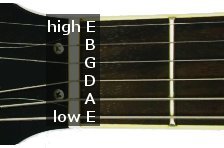
The numbers on a line indicate which fret to play. The numbering begins at the nut towards the guitar bridge. A 0 number is an open string.

With this method, you have a straightforward visualization of which string and at which fret to play.

This tablature says that:
- The first note is to be played on the open D string.
- The second note is at the 3rd fret on the same string.
- The third note, play at the 5th fret on the G string.
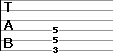
When you see a few vertically aligned numbers on the tab lines, play these notes simultaneously.
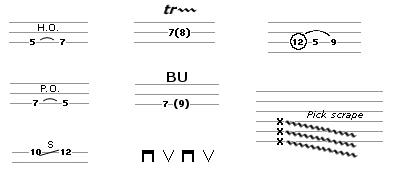
Besides locations of notes on a fingerboard, guitar tabs often include symbols and notations that provide additional information about techniques used in a song and other useful details.
You don't need to learn these symbols right now; I'll introduce them inside my lessons when necessary. Although you can use the comprehensive chart of guitar tab symbols as a reference for any unknown tab notation you'll encounter elsewhere:
Note that in guitar music, the strings are often also identified by numbers from 1 to 6 like so:

This approach is particularly convenient when the strings are tuned to alternative pitches.
-----------------
T -----------------
A -----------------
B -------6---------
-------5---------
-------3---------
</div>
I would like this explained more, as I am new to guitar. How do I play when it is written like this?"